
There’s something quietly overwhelming about school admission season. The documents required for school admission often confuse parents, especially during the first admission process. You’ve already done the hard part — you’ve visited the school, asked your questions, maybe sat through a parent orientation that ran forty minutes too long. And now someone hands you a checklist. Or worse, they don’t. And you’re left piecing it together from WhatsApp forwards and other parents who are just as confused as you are.

This is that checklist. But also more than that.
Because documents required for school admission aren’t just bureaucratic boxes to tick. Each one tells the school something about your child — where they’ve been, who they are, whether they’re ready. And knowing exactly what to bring, and why, saves you from that sinking feeling at the admission counter when they ask for something you didn’t know you needed. If you want to know how the whole admission procedure works, you can refer to this guide for parents.
The documents required for school admissions are a birth certificate, transfer certificate, address proof, Aadhaar card, photographs, previous school records, etc
The Birth Certificate — Start Here, Always
Everything begins with the birth certificate. It seems obvious until you realize yours is in a drawer somewhere, possibly folded wrong, possibly faded at the edges. Schools need this to verify your child’s date of birth — not just for records, but because age criteria for Class 1 admissions especially can be strict. Many CBSE schools follow a cutoff date, typically March 31st, and they will check.
Get it early. Get multiple photocopies. Self-attest them.
If your child was born in a private hospital, the certificate comes from the municipal corporation after registration. If it was a home birth or a smaller facility, the process might differ slightly. Either way — original plus two copies, keep them together. This is one of the most important documents required for school admission.

Transfer Certificate and Report Card — The School History
If your child is moving from one school to another — even within the same city — you’ll need a Transfer Certificate (TC). This is issued by the previous school and it basically says: yes, this child was here, yes they left in good standing, no there are no pending dues or disciplinary issues.
Schools take this seriously. A missing TC can genuinely stall an admission.
The progress report card or mark sheet from the last attended class accompanies this. It tells the new school where your child is academically. For younger classes, it’s more of a formality. For Class 6 onwards, it starts to matter more. Some schools use it to place children in appropriate sections or even flag if remedial support might help.
Keep originals. Bring photocopies. Don’t assume the school will make copies for you. Transfer certificate is among the key documents required for school admission.
Proof of Residence — More Important Than You’d Think
Proof of residence is one of those documents that sounds straightforward until you’re staring at a utility bill in your landlord’s name trying to figure out if it counts. For most schools, especially those with defined local catchment zones or RTE quota seats, address proof is essential.
Accepted documents typically include:
• Aadhaar card (child or parent)
• Electricity or water bill (not older than 3 months)
• Rent agreement (registered, if applicable)
• Voter ID or passport
• Bank passbook with address
If you’ve recently moved, or your Aadhaar still shows your old address, sort this out before admission season. Schools sometimes ask for two forms of address proof, especially for government-aided schools where catchment-based preference applies to seat allocation. Address proof is an essential part of documents required for school admission.

Passport-Size Photographs — Bring More Than You Think You Need
Somewhere between four and ten photographs. Seriously. Every form, every ID card application, every transport enrollment asks for them separately. The standard requirement is recent, white-background, passport-size photographs of the child, and often of both parents.
Take a fresh set. Not the ones from last year’s passport application. Children change fast and schools use these for ID cards, records, and sometimes notice boards. Photographs are commonly included in documents required for school admission.
Aadhaar Card of the Child
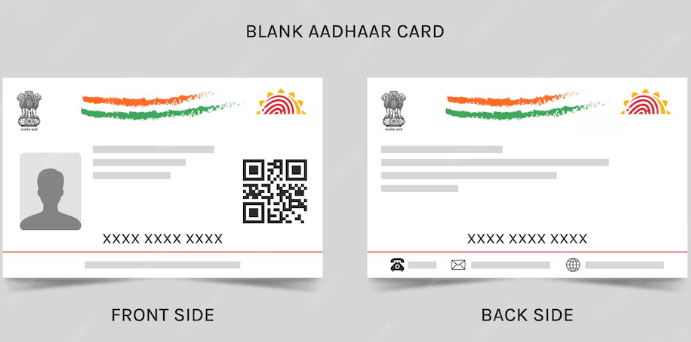
This has become near-universal in Indian school admissions. The child’s Aadhaar card links to various government schemes, mid-day meal programs, scholarship tracking, and more. Some schools will accept enrollment ID if the Aadhaar isn’t issued yet, but having the actual card simplifies everything.
For children who don’t yet have one — the Baal Aadhaar (blue Aadhaar) is available for under-5s using parent biometrics. Get it done before you begin school applications. It removes one variable from a process that already has too many. Aadhaar card is now widely included in documents required for school admission.
Caste Certificate and Income Certificate — For Specific Quota Seats
If you’re applying under EWS, OBC, or SC/ST quota seats — which are reserved under the RTE Act and sometimes under school-specific policies — you’ll need a valid caste certificate and in many cases an income certificateissued by a competent authority (usually a Tehsildar or SDM).
These certificates have validity periods. Some are annual, some are valid for longer. Check the issue date before submitting. An expired income certificate has caused more than a few admission heartbreaks.
This applies especially to schools with RTE seats. The documents required for school admission under quota categories are slightly different from general category — don’t confuse the two checklists. These are additional documents required for school admission under specific categories.
Medical or Vaccination Records
Not all schools ask for this, but many do — especially for nursery and KG admissions. A basic immunization record or vaccination card is increasingly part of admission dossiers. Some schools have empanelled doctors and conduct a basic health check during admission. Others just want to see that routine vaccinations are up to date.
It’s a good document to have organized anyway. Keep the original vaccination card safe; share a photocopy. Medical records may also be part of documents required for school admission.
NRI or Out-of-Country Admission — Additional Layer
If your child has been studying abroad or you’re returning to India, you’ll need a few extra documents on top of the standard list:
• Passport (child’s)
• Visa pages / travel history (sometimes)
• Equivalency or attestation from the previous country’s education board
• SLC (School Leaving Certificate) translated into English if it isn’t already
This process takes longer. Start it early — ideally two to three months before your intended admission date. Additional documents required for school admission apply for international students.

Special Needs Documentation
If your child has a disability or specific learning need, schools covered under the Rights of Persons with Disabilities Act must accommodate. You’ll need a disability certificate issued by a recognized medical authority. This also unlocks certain accommodations — extra time in exams, scribes, modified assessments.
Don’t hesitate to share this. The right school, with this information, can plan better. It’s not a limitation — it’s information that helps your child. Specific certificates are also included in documents required for school admission.
Conclusion
The documents required for school admission aren’t complicated, but they are many — and the smallest gap in the pile can slow everything down. Birth certificate, TC, report card, address proof, Aadhaar, photographs, quota documents if applicable, and the occasional medical record. Get them organized. Keep originals and photocopies separate. Carry a folder, not a bag of loose papers.
And start early. Admission season has a rhythm and the schools that have the best programs fill fastest. Being document-ready is the first, most basic way to stay in the running. For a complete understanding of the admission procedure, you can explore this detailed CBSE admission guide.
FAQs
Q1. What are the documents required for school admission?
Documents required for school admission include birth certificate, transfer certificate, address proof, Aadhaar card, photographs, and previous school records.
Q2. What if my child doesn’t have a Transfer Certificate yet?
You can typically apply provisionally and submit the TC within a school-specified deadline — often 30 to 60 days after admission. Inform the school in advance and get written acknowledgment of the arrangement.
Q3. Is Aadhaar mandatory for school admission in India?
It is not legally mandatory for admission itself, but most schools collect it for record-keeping and government scheme enrollment. If unavailable, the Aadhaar enrollment slip is usually accepted as a temporary substitute.
Q4. What counts as valid address proof if I’m renting?
A registered rent agreement combined with one utility bill (electricity/gas/water) in your name is usually sufficient. If the utility bill is in the landlord’s name, pair the rent agreement with your Aadhaar or bank passbook showing your current address.
Q5. How many passport photographs should I carry to the admission office?
Carry at least eight to ten. Between the main admission form, transport enrollment, ID card application, and library card, the number adds up faster than expected